SEE · for pianists who already read music

Stop asking each note what it is.

Bach, Invention No. 13 in A minor, bars 1 and 2, exactly as printed As printed What SEE shows

Drag the handle.

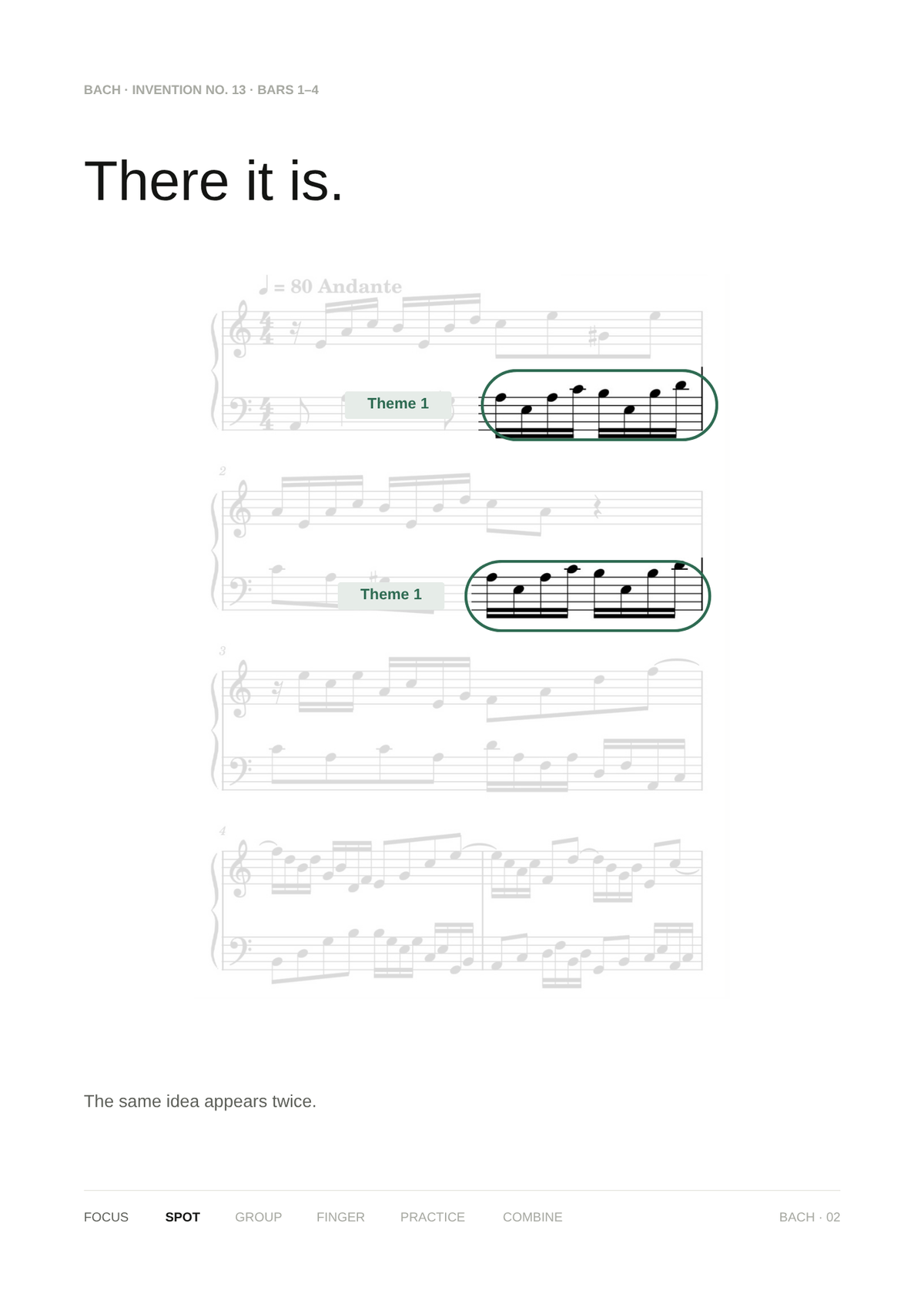
One idea. Four times in two bars — in both hands.

Start seeing what the notes are doing together.

Get SEE for €19

One-time payment · 30-day money-back guarantee · Download link by email after checkout

4.8 · 1.947 reviews

This is SEE

Practice your ability to SEE.

Bach, Invention No. 13 in A minor — page 2 of the printable working score
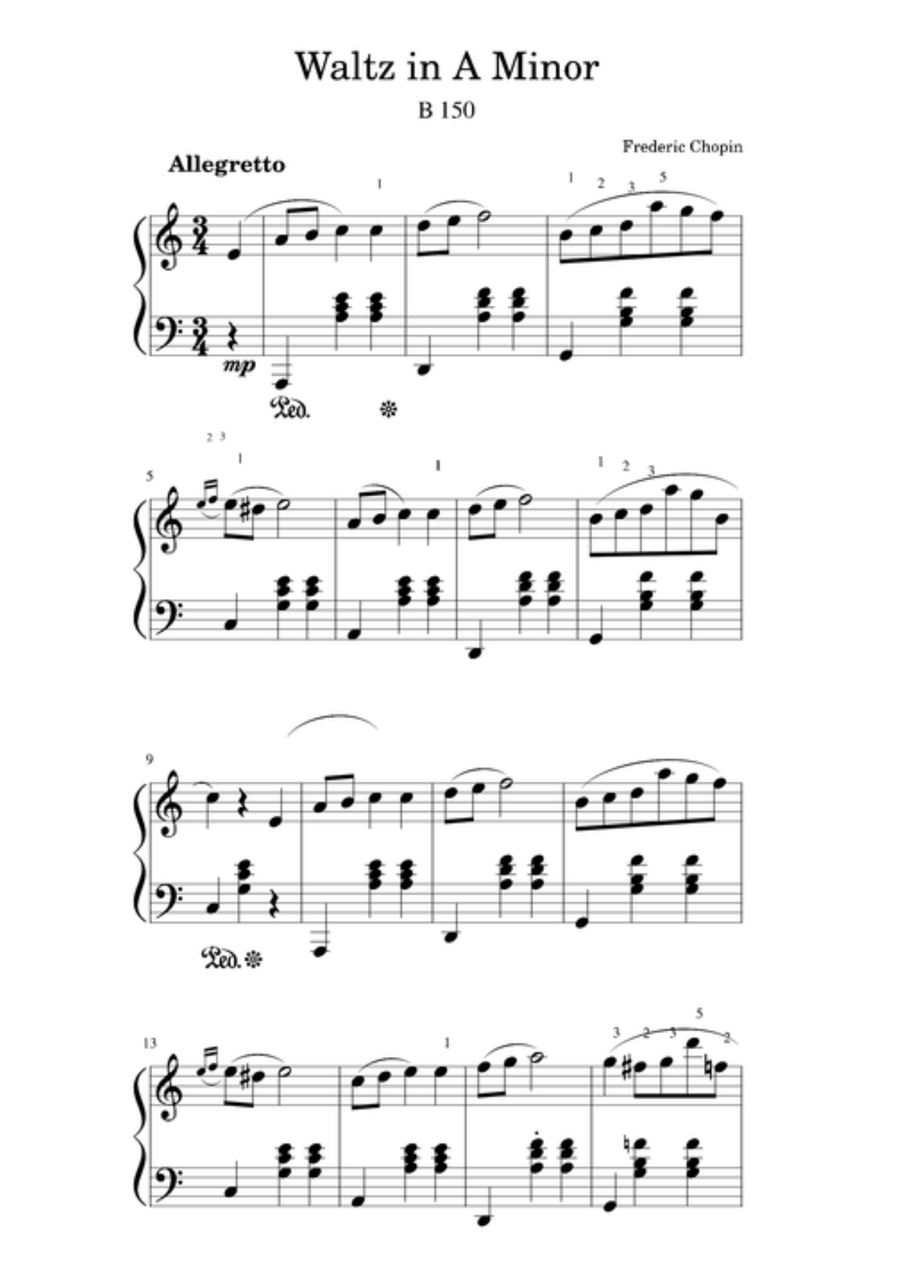
Chopin, Waltz in A minor — page 2 of the printable working score
SEE workbook page 13: “Fingering.” — hand diagrams and fingered notation for Theme 1, right and left hand
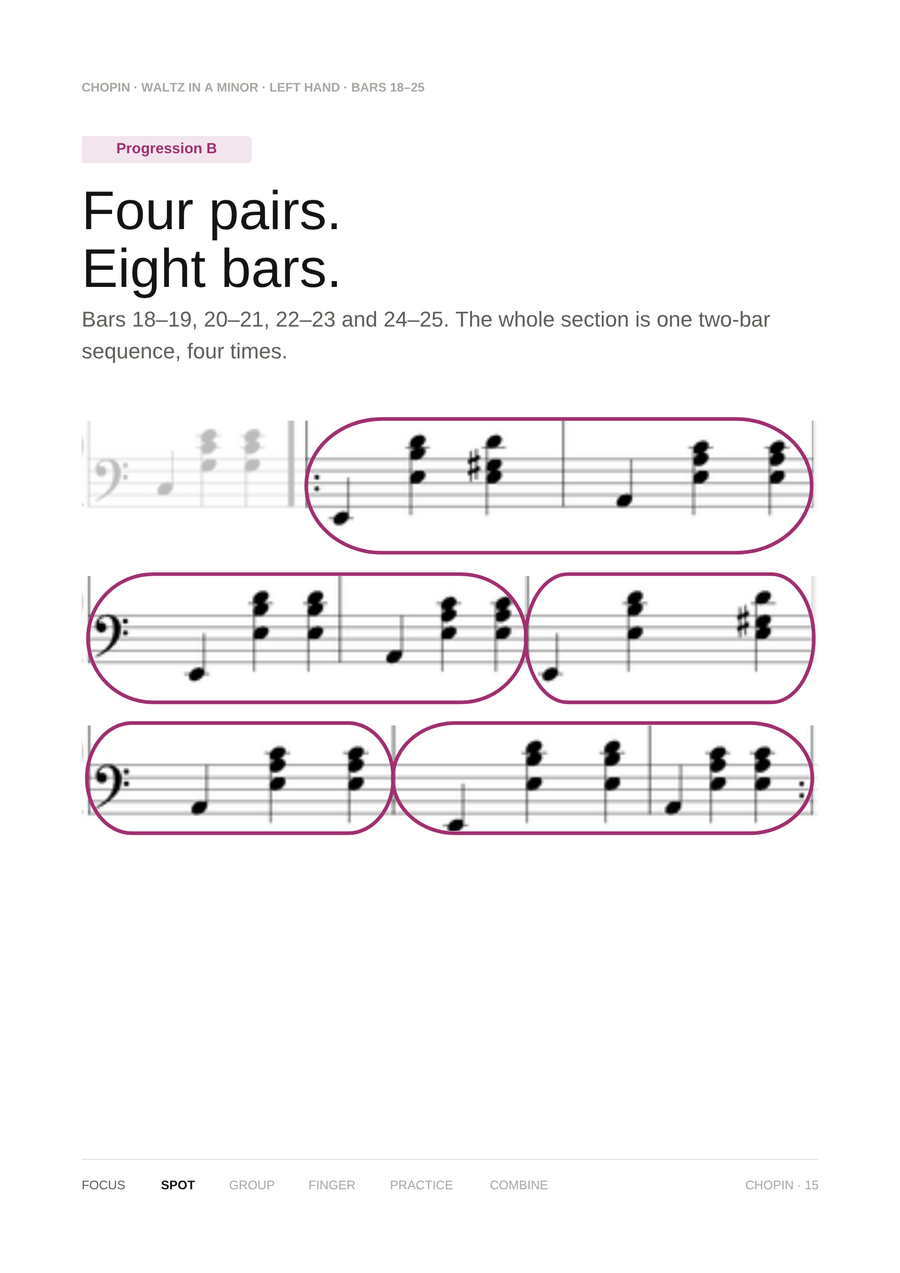
SEE workbook page 91: “Four pairs. Eight bars.” — Chopin Waltz in A minor, left hand, bars 18–25, Progression B ringed
SEE workbook page 31 on a tablet: “What is this made of?” — Bach Invention No. 13, bars 9–12, fifteen shapes ringed in the colours of Themes 2, 3, 4, 6 and 7

Every piece is built from a small number of ideas that come back. The same shape in a different place. The same move handed to the other hand. The same idea, turned around.

They are printed on the page you already own — nobody hides them. What was never trained is the looking.

  • What you get
  • A step-by-step system for learning pieces faster — without starting from zero every time.
  • A clear practice framework that shows you what to work on.
  • Actually compounding progress - a way to make every piece you learn build on the last
  • 133 page PDF workbook for your device, 2 printable working scores for the piano desk.
Get SEE for €19

€19one-time

One-time payment · 30-day money-back guarantee · Download link by email after checkout

Pay securely with
  • Visa
  • Mastercard
  • American Express
  • PayPal
  • Klarna
  • Apple Pay
  • Google Pay
  • Shop Pay

The moment this is about

"Just sight-read it."

Somebody puts a page in front of you that you have never seen.

You can play. You have pieces you have worked on for months. But this — finding the first chord, losing it, starting again — this goes the same way it went ten years ago.

Your pieces got better. Your reading didn't.

It was never a practice problem.

Nobody ever taught you what counts as one thing.

Notation teaching has an end point, and it is accurate decoding: look at a symbol, produce the right sound at the right time. Once you can do that, you are considered a reader and you get moved on to repertoire.

  • notes
  • groups
  • meaning

There is no chapter after that one. And from the outside, someone who decodes accurately and someone who reads fluently look identical — they only come apart when a new page appears. By then everybody calls it talent.

A fluent reader still reads every note. What changes is how much arrives at once: whether these eight notes are eight separate events, or one shape that happens to be written out.

That decision — what counts as one thing — is the skill nobody explained.

You climbed the first rung as a child. Nobody mentioned there were two more.

What SEE does

You look first. Then you play.

See, what your piece is made of.

Instead of note, note, note...
You start seeing:

  • notes
  • groups
  • structure

Structure gives you a plan. The score doesn’t get shorter — but you finally SEE what to focus on.

Read less, SEE more.

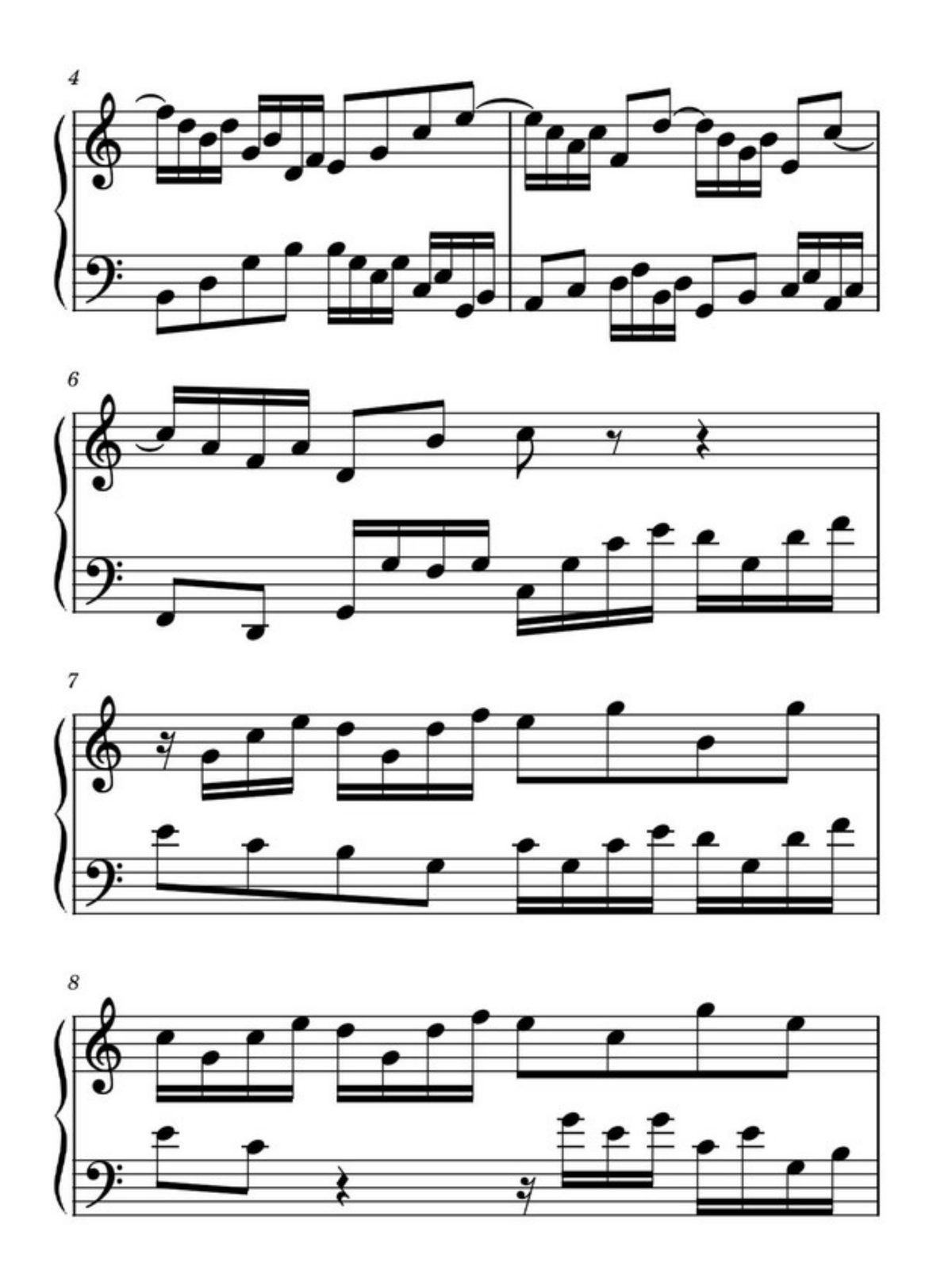
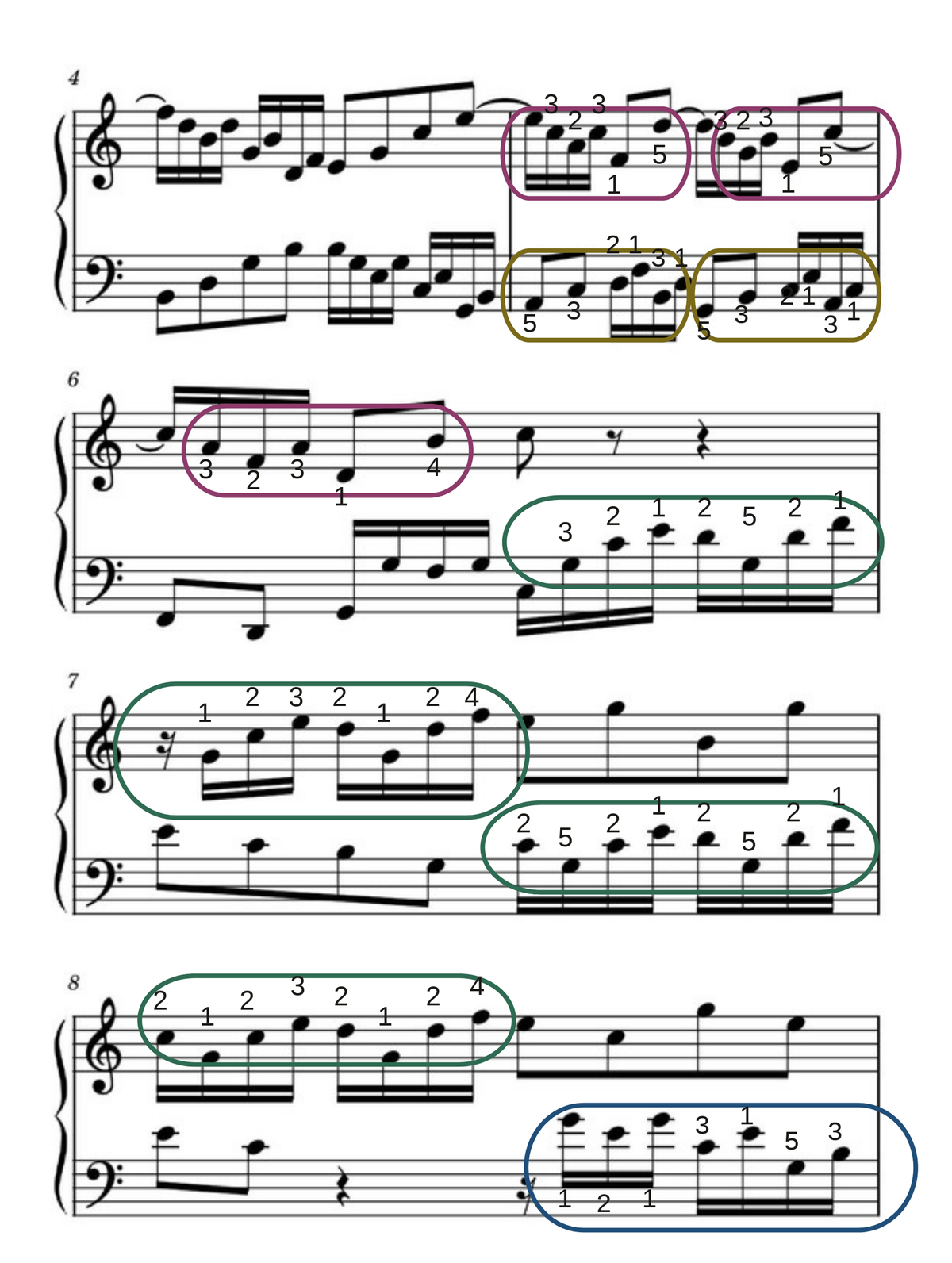
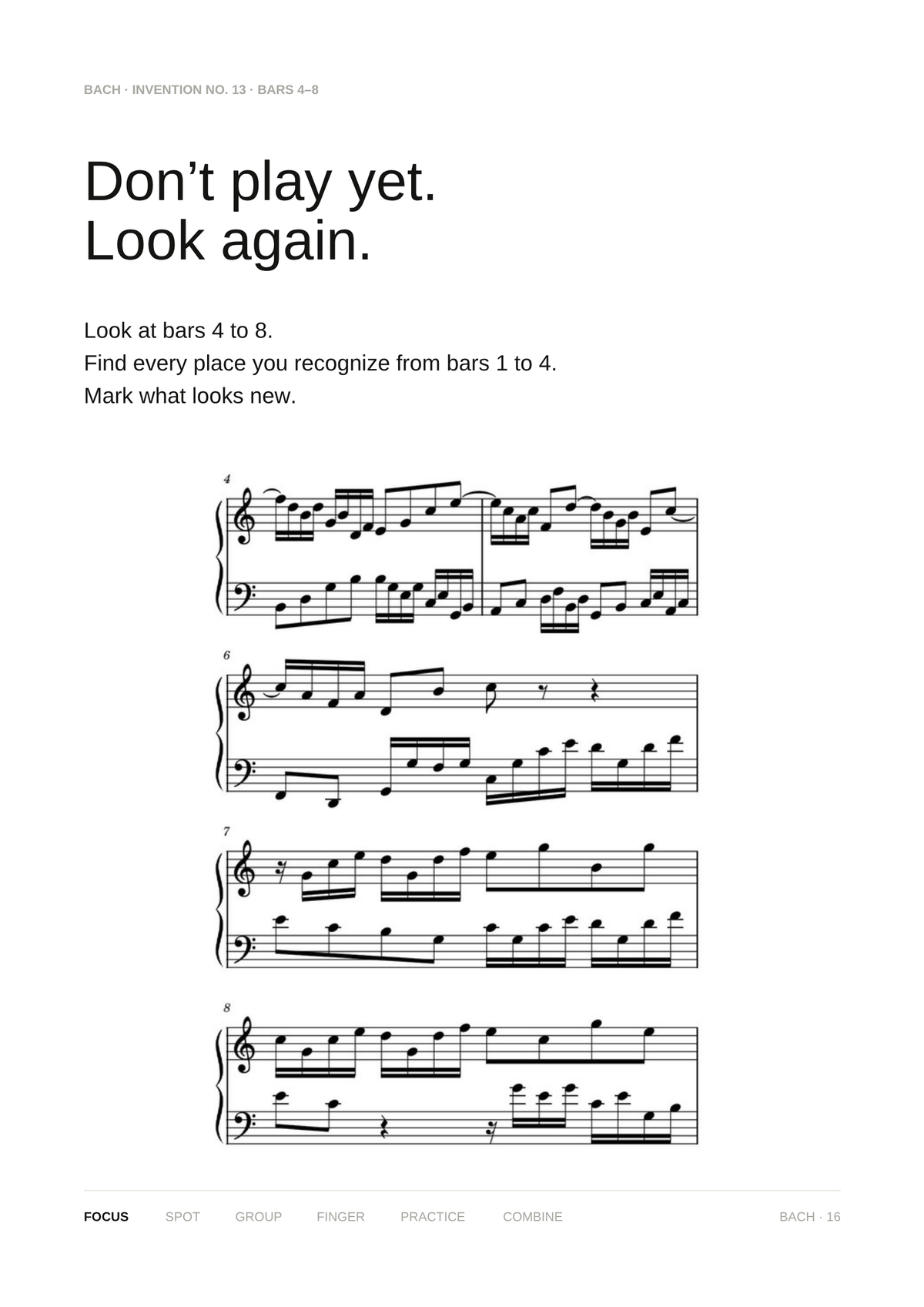
Bach, Invention No. 13, bars 4 to 8: the clean score exactly as printed, no markings Before SEE After SEE

Drag to reveal what SEE makes visible.

The music itself doesn’t become simpler. The way you see it does.

Opening a new piece today

“I have to learn all of this.”

After SEE

“Wait — I already know this from the first page.”

That moment is what SEE is built for. Not because the music got easier — because you recognized it.

From Trustpilot

Other people who can finally SEE

Trustpilot
At first I thought this was going to be an e-book on music theory, which I always hated, but it actually feels like the more natural way of learning music
Anne-Marie12/1/25
Trustpilot
I started looking for patterns in my old songs, which took MONTHS to learn, I cant believe that I didnt recognize those patterns by myself, I just laugh at my old self
Lucy5/28/26
Trustpilot
It's still work to do in the end and took some time but it was absolutely worth it. I recommend it.
Georgia5/13/26

Why Bach and Chopin

Same approach. Different practicing.

Bach and Chopin are about as different as piano music gets — more than a century apart, two kinds of structure. That makes them an honest test: same way of looking, very different answers.

How you start — the same every time

  1. 01Narrow your focus.
  2. 02Find what returns.
  3. 03Notice what belongs together.
  4. 04Tell familiar from changed from new.
  5. 05Work outward until the larger structure shows.

What that same looking reveals

Study 01 · Bach

Invention No. 13 in A Minor

BWV 784

Structure in plain sight.

Bach makes structure visible: ideas return, pass between the hands, come back upside down. Here the same looking finds:

  • Recurring themes, and where each returns
  • The same idea passing between the hands
  • Familiar material that comes back transformed or mirrored
Study 02 · Chopin

Waltz in A Minor

B.150

A different world. A different result.

Same way of looking. It finds something else entirely — and that is the point:

  • Small left-hand units that combine into larger progressions
  • Right-hand phrases that return with a different ending
  • Structure at more than one scale at once

Everything you learn carries over.

That’s why there are two. If one way of looking shows you how two such different pieces are put together, you’re not learning a trick for one piece — you’re learning how to investigate every piece from now on:

Trustpilot
I tried this with my favorite piece from childhood, which I had completely forgotten how to play. It's easier than ever.
Julia

Inside the workbook

A workbook, not a course.

You already own books that explain things. This one asks you to do something: look at a real score and find what is there, before you play it. Real notation on every page, six ways of working, nothing to watch. No subscription, no videos.

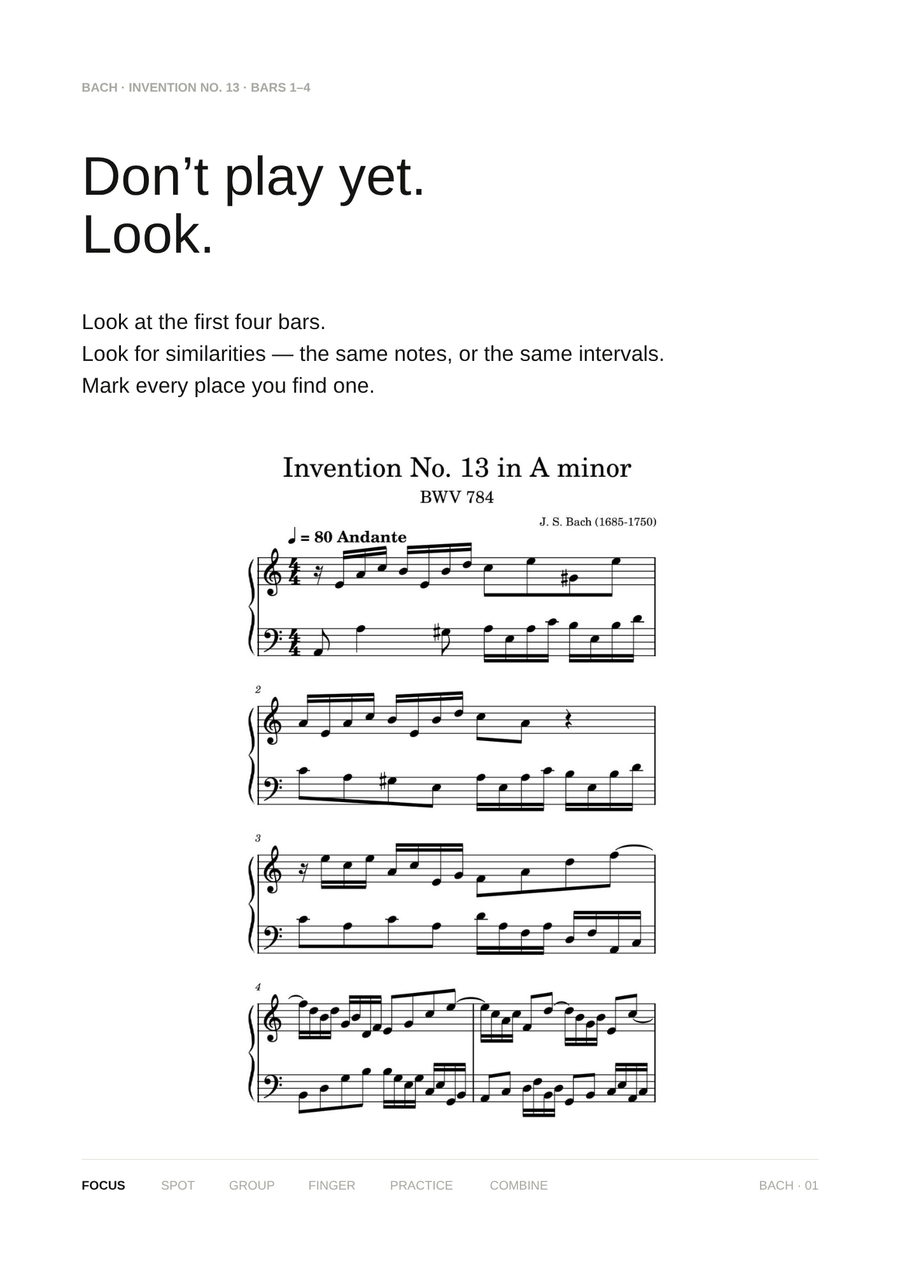
SEE Challenge page: Bach Invention No. 13, bars 4–8, unmarked — “Don’t play yet. Look again.” with three things to look for
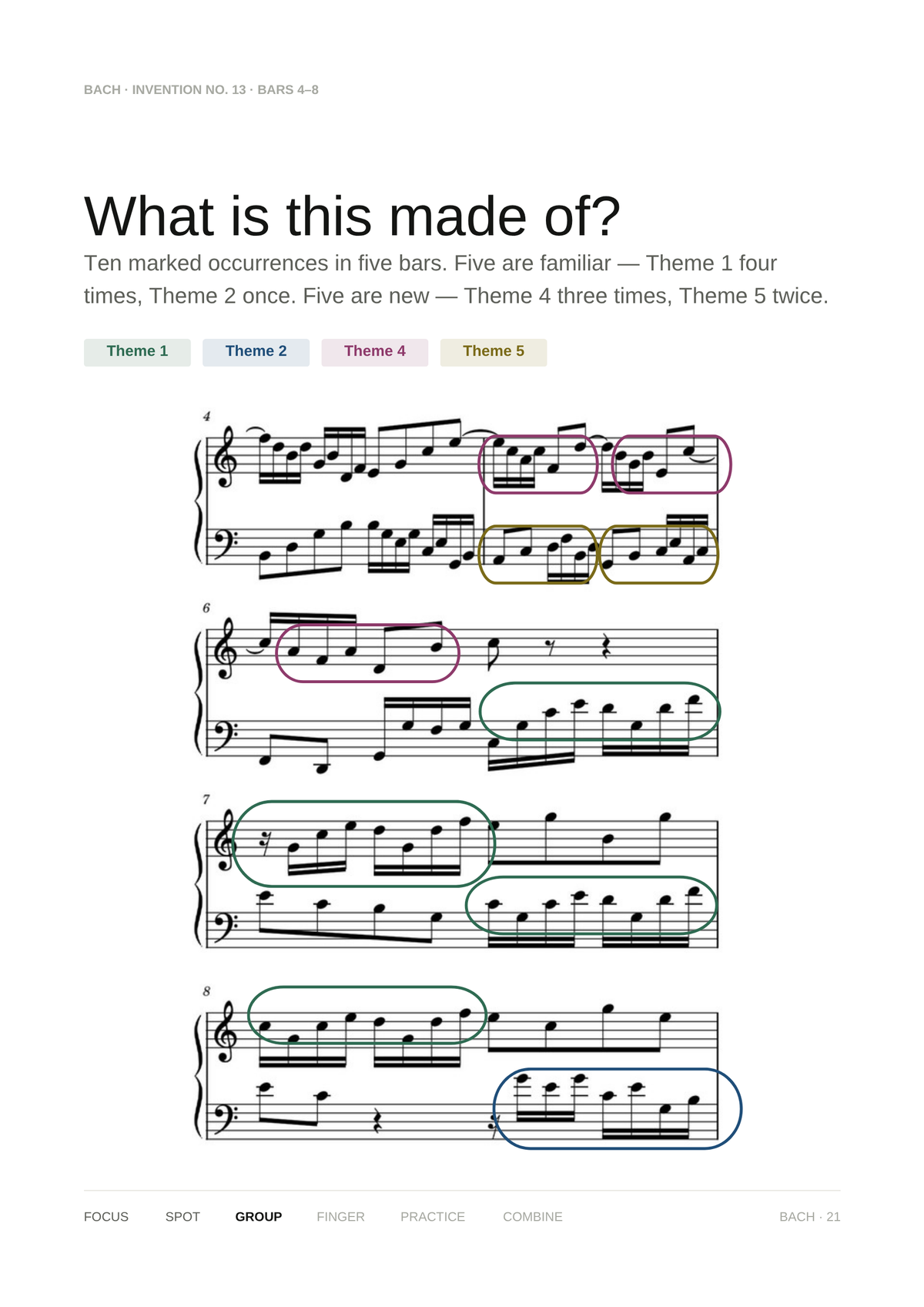
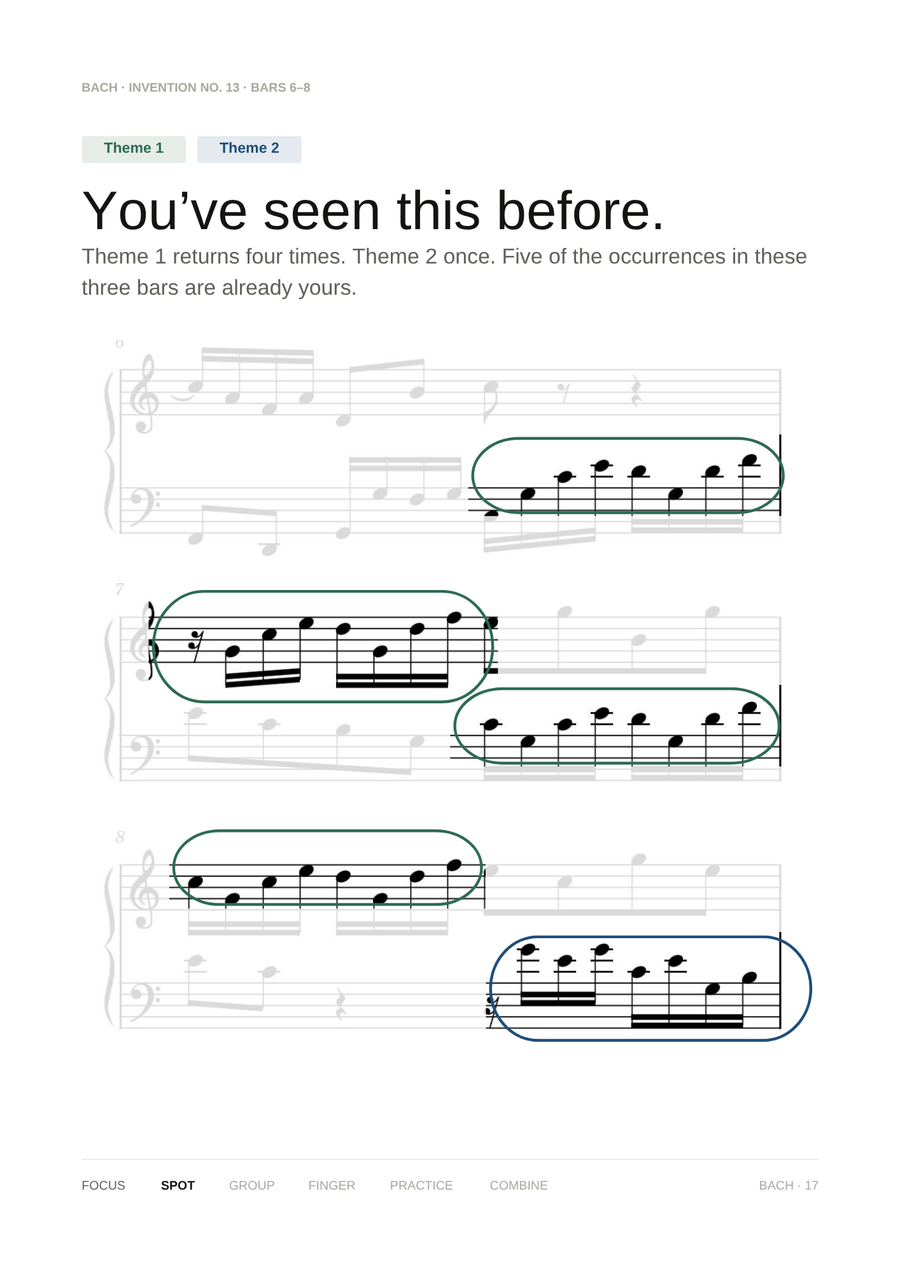
SEE Reveal page: the same bars 4–8 with ten shapes ringed in colour — Theme 1 four times, Theme 2 once, Theme 4 three times, Theme 5 twice
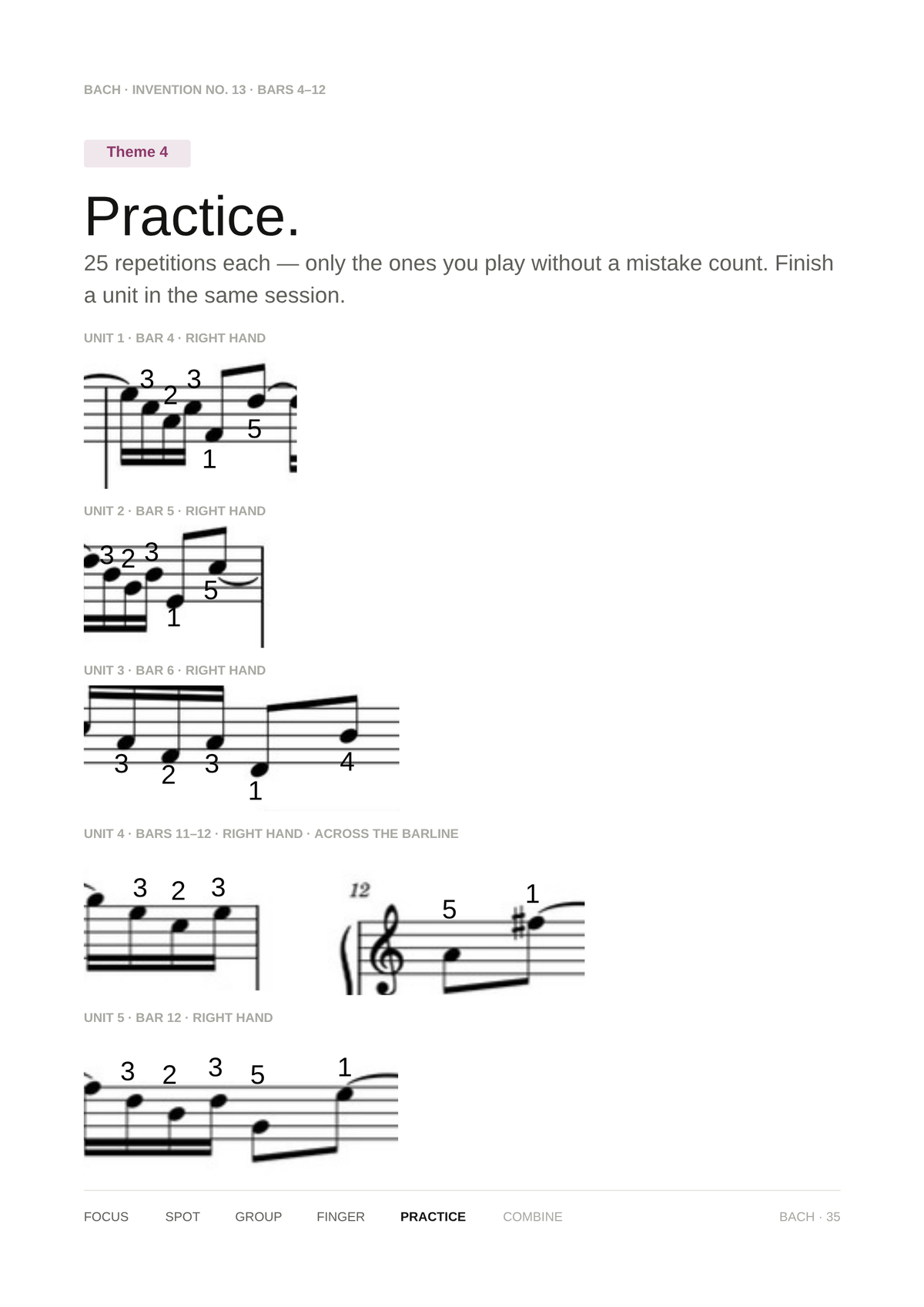
SEE Practice page: Theme 4 from bars 4–6 as five fingered practice units, 25 mistake-free repetitions each

How SEE is used at the piano

On the screen

The SEE workbook on a tablet or laptop: a few bars at a time, and what to look for in them.

On the music stand

The printed working score on the music stand: the whole piece in view, your own pencil marks on your own copy.

Both printable working scores are included — one for each piece.

Six ways of working

Every page is one of these.

  • FocusLook at a manageable section.
  • SpotFind what repeats, returns or feels familiar.
  • GroupSee how smaller ideas form larger structures.
  • FingerGive each musical unit a physical plan.
  • PracticePractise the meaningful units separately.
  • CombinePut the music back together.
  • 133-page SEE workbook
  • 2 printable working scores
  • 3 PDFs · tablet or print
  • Real notation throughout

Is SEE for you?

Built for a specific kind of pianist.

SEE is for you if

  • You can read basic sheet music, at your own pace.
  • You’ve learned pieces before — and felt the reset when the next one started.
  • You’d rather understand the music than memorize it.

SEE is not

  • A beginner course. SEE changes how you read music; it doesn’t teach note names.
  • A video course, an app or a subscription.
  • A shortcut. The music stays exactly as hard — you’ll just see it.
  • A sight-reading speed course. SEE trains what you notice on the page, not how fast you name notes.

The decision

The next piece is coming either way.

You will open it in a few weeks. You can meet it the way you have met every piece so far — note by note, from zero. Or you can open it already looking for what you have seen before.

Do you want to learn one more piece the old way?

MUSIFLUENT — SEE

A Pattern Recognition Workbook for Piano

  • The SEE workbook133-page PDF
  • Study 01 — Bach, Invention No. 13 in A Minor
  • Study 02 — Chopin, Waltz in A Minor: left hand and right hand
  • Pattern-recognition exercises on real notation
  • Structural maps of both pieces
  • Fingering and Practice Units for every recurring idea
  • Combine exercises that put the music back together
  • Printable working scoresIncluded
  • Bach — Invention No. 13: a clean copy of the score to print, 6 pages
  • Chopin — Waltz in A Minor: a clean copy of the score to print, 4 pages
  • Keep SEE open on a screen and the printed score on the music stand: the whole piece stays in view, and your own markings go on your own copy — not on the workbook.
  • Three PDFs in total. Read the workbook on a tablet beside the piano or on a laptop; print the two scores at home.
€19one-time

Regular price €99.

Get SEE for €19

One-time payment · No subscription · Download link by email after checkout

30-day money-back guarantee

Try SEE for 30 days. If it doesn’t change how you see piano music, email us and we’ll refund your purchase.

Questions

Before you decide.

Is it for beginners — or for people who already read music?

For people who already read. If you’ve never read notation, start there first. If you read fluently and still feel every new piece start from zero, SEE is built for exactly that.

Do I need to know music theory?

No. SEE doesn’t use theory vocabulary — no chord symbols, no Roman numerals. You work with what’s on the page: what repeats, what returns changed, what combines. If you can find bar 14, you can do SEE.

How hard are the two pieces?

Both are complete, real pieces — not simplified arrangements. But you aren’t asked to perform them at tempo; you’re asked to see them, and every hands-on step is broken into small Practice Units.

What exactly do I get, and why are the scores separate files?

Three PDFs: the 133-page SEE workbook, and two printable working scores — clean copies of the Bach and the Chopin. The workbook works best on a screen, where it zooms into a few bars; the score works best on paper, on the stand, where the whole piece stays in view and your pencil marks go on your own copy.

How long does it take?

SEE is meant to be worked through beside the piano, a few pages per session. There’s no timer — but there is one rule: 25 mistake-free repetitions per Practice Unit, finished in the same session.

What if it isn’t for me?

Email us within 30 days of purchase and we’ll refund you. No forms, no questions about why.

MUSIFLUENT · SEE

Every piece you learn should make the next one easier.

Right now, each new score costs you the same weeks as the last one. SEE is where that stops — not because the music gets easier, but because you start to recognize it.

A pianist absorbed in playing at home in the evening, a slight natural smile
Get SEE for €19

€19one-time

30-day money-back guarantee · Download link by email after checkout

From Trustpilot

More people who can finally SEE

Trustpilot
“I went back to something that I completely forgot how to play, took me probably 3 months to learn. I honestly just stared at the page for a minute and there were repetitions everywhere. I don't think I will ever forget it now."
Penelope9/6/26
Trustpilot
“There’s something really satisfying about looking at a page that used to intimidate you and suddenly understanding what you’re seeing.”
Stella3/4/26
Trustpilot
“For someone who zones out as soon as a teacher starts talking theory, this was surprisingly enjoyable.. Classical music is just not my type of music in general."
Phoebe8/26/26